.jpg)
Régis Gonçalves | 'In Memoriam'
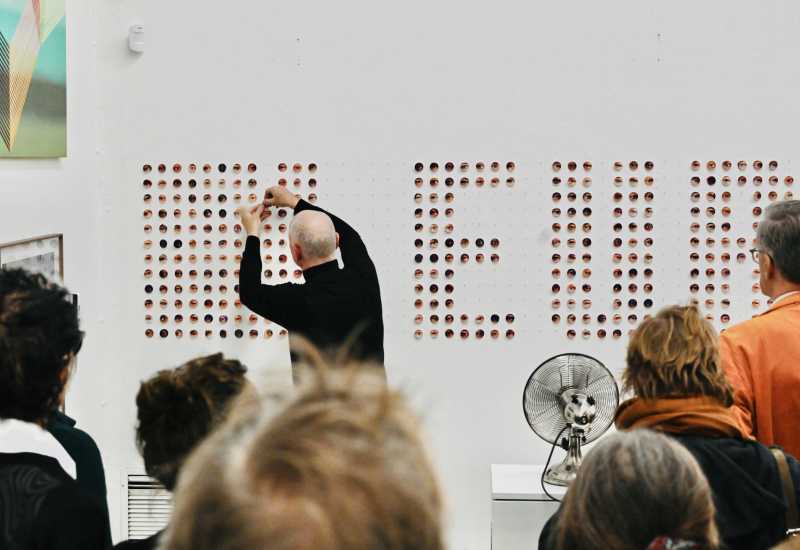
Names can fade from collective memory, especially when the people behind them were once deliberately removed from society. With In Memoriam, Régis Gonçalves commemorates 142 men who, in the eighteenth and early nineteenth centuries, were prosecuted for sodomy: 96 men who were executed and 46 men who were sentenced to life imprisonment in the Amsterdam Rasphuis.
Their fate was part of a much broader persecution. Between 1730 and 1811, hundreds of sodomy cases were brought before Dutch courts. Men could be banished, imprisoned, or executed. The persecution did not unfold solely in courtrooms and prisons: public executions were used as a deterrent until 1797, and stories about “sodomites” and their grim fate circulated widely in songs, pamphlets, and other texts of the time.
Régis encountered the names of these 142 men during his research into the persecution of men who had sexual relations with other men. The 46 men who were imprisoned for life in the Rasphuis were already central to his earlier exhibition The Residents of the Secret Chambers. In In Memoriam, he now also includes the men who were put to death.
Opposite them, Régis places Frederik Adriaan van Reede van Renswoude. His name surfaced during the sodomy prosecutions, yet his social position protected him from the fate that others suffered. In his portrait, Régis uses white as a symbol of a reputation that remained largely intact despite the accusations.
This inequality makes the history relevant today. Who becomes excluded when acceptance declines? And for whom are the consequences limited? What forms does exclusion take when open persecution no longer exists?
--
Opening - 28 October, 5:30 PM
On Wednesday 28 October at 5:30 PM, the exhibition will be officially opened by Nella Geurts.
Opening speech by Nella Geurts. Nella Geurts is a sociologist at Radboud University. Her research focuses on processes of inclusion and exclusion in the Netherlands, with particular attention to the experiences of bystanders and victims and the influence of the broader social and political climate.
Performance by GalaKoor.
Following the opening speech, GalaKoor will perform three Sodomite Songs, which form part of the exhibition. The performance lasts approximately eight minutes.
/Museumnacht%20Amsterdam%20-%20Zwart%20-%20Stacked%20-%204.png)